Yes, it's a bubble. No, that isn't the point.
People keep asking whether AI is a bubble. It is, obviously. But that is the wrong question — a bubble popping has never meant the technology was wrong. A working developer's view from the floor.
Also in Türkçe
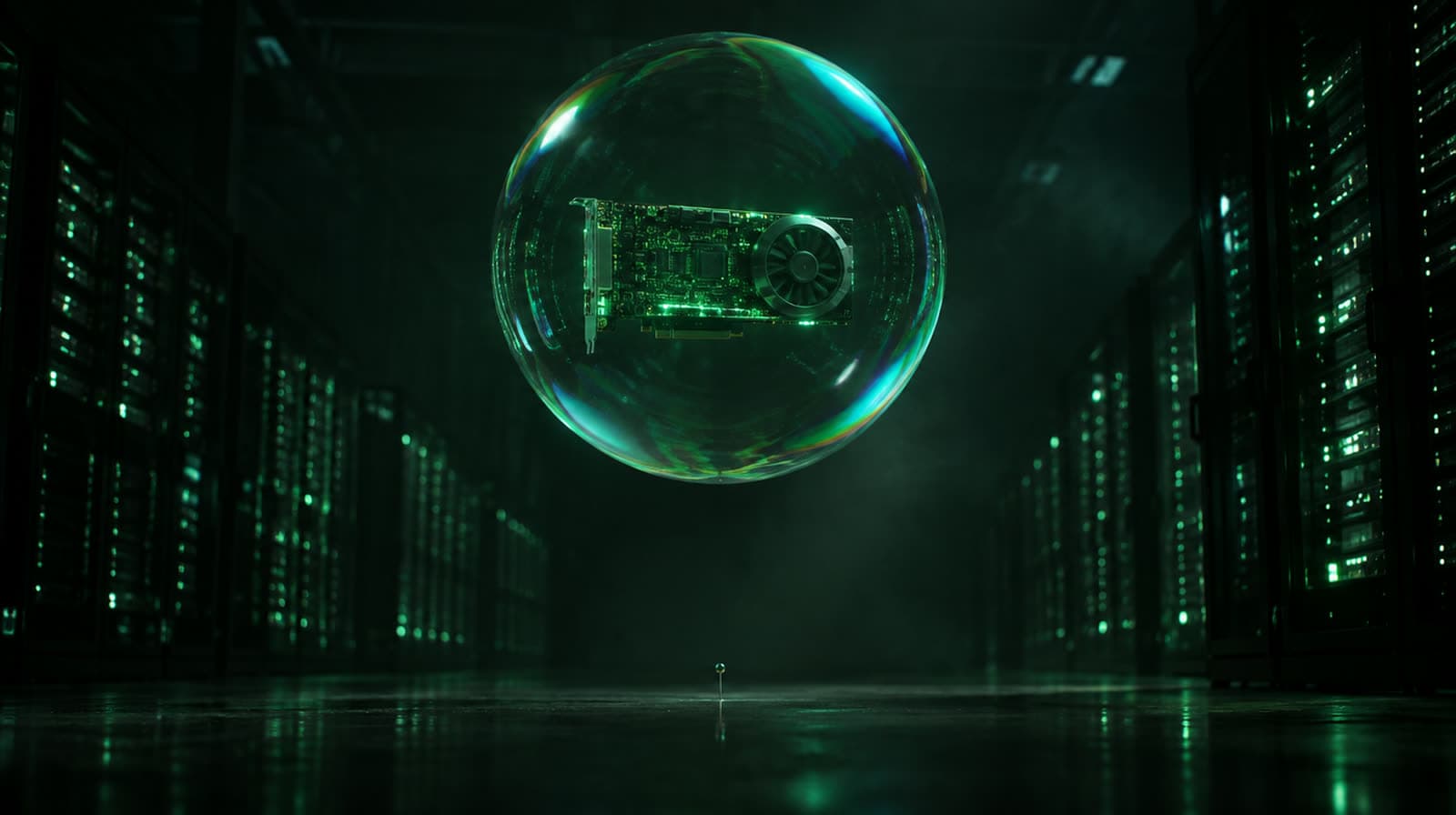
Last week I saw a pitch deck. The company's product took what you typed into one text box and put it into another text box. There was AI in between. Its valuation was higher than the entire neighbourhood I live in.
That same week I finished a refactor in an afternoon that should have taken three days. There was AI in between there too.
This is exactly why "bubble or revolution?" drives everyone mad. Both are happening at once, and nobody wants to put that in one sentence. So I will: a bubble is not a verdict on the technology, it is a way of financing it.
How we know it's a bubble
A bubble has no technical indicator. It has sociological ones, and all of them are visible from the floor:
- Companies that answer "what do you do?" with a model name. Saying "we use GPT-5" is like answering "what are you building?" with "cement".
- The same product, twice the price, because the word AI is now in the name. Same code. Same servers. New sticker.
- Non-technical people fluent in technical words. In 2021 everyone said "wallet". Now everyone says "agent". Nobody knew what they meant either time.
- And the clearest one: an industry where nobody makes money and everybody grows.
None of this means the technology doesn't work. It means money is moving faster than the technology is maturing. Which is the definition of a bubble.
The dot-com invoice, and what it paid for
In 1999 Pets.com had a sock puppet mascot and a Super Bowl ad. The company shut down nine months after going public. Webvan burned billions selling groceries online and collapsed. For a brief moment in that era, Cisco was the most valuable company in the world.
When it popped, Amazon lost roughly 90% of its value. You know how that one turned out.
A bubble kills the wrong companies. It does not kill the infrastructure.
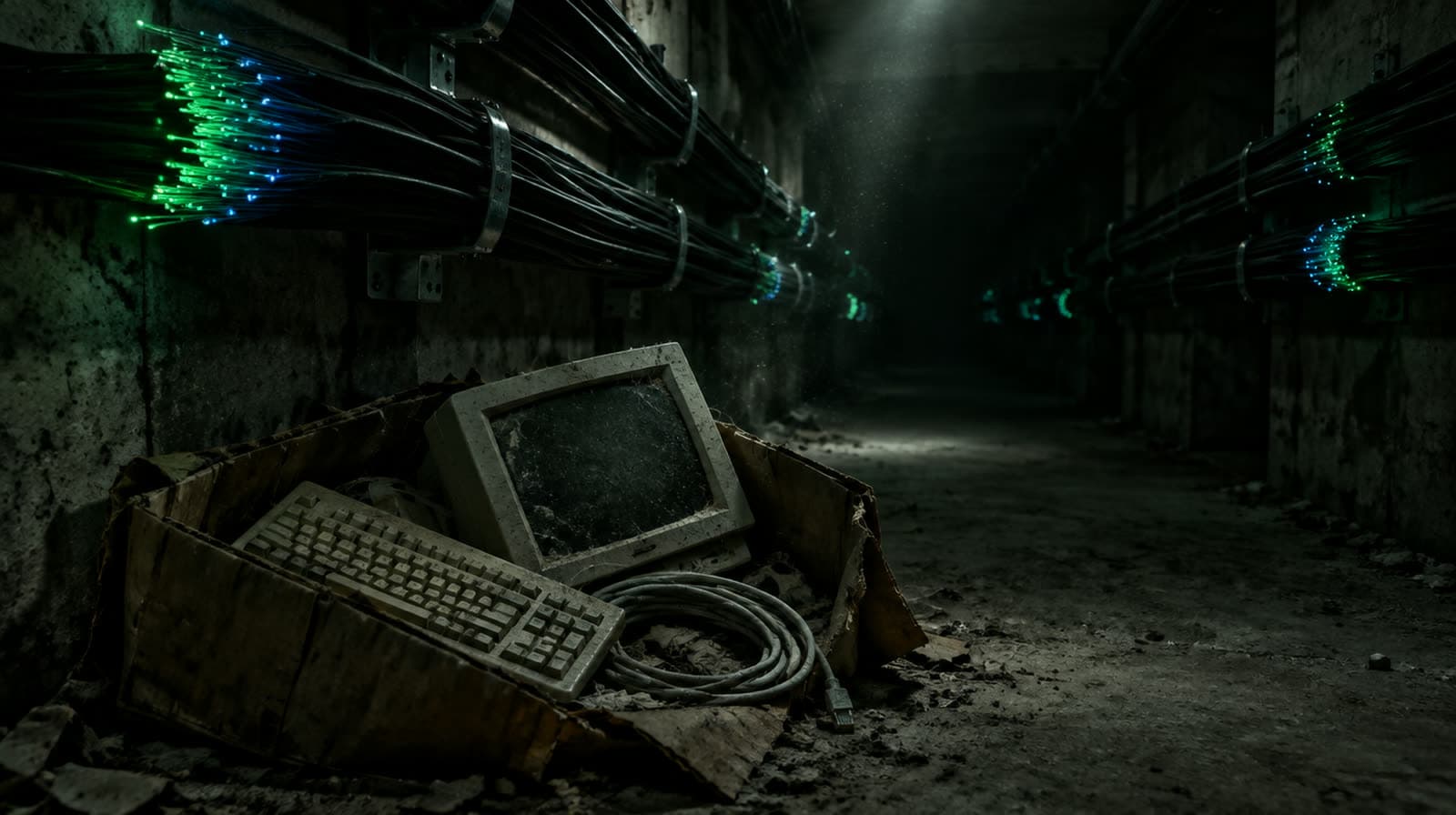
During dot-com, telecoms laid far more fibre optic cable than anyone believed would ever be filled. Then they went bankrupt. The cable stayed in the ground. A decade later that "excess" fibre is what made video streaming, cloud computing and most of what is in your pocket possible.
So the money you put into a sock puppet wasn't wasted. It just wasn't returned to you.
So what is actually real
I'm a developer. I can't measure hype, but I can measure how much my work changed. The honest answer: a lot, though not where you'd expect.
AI does not write my code for me. I still have to know whether what it wrote is correct — and that was always the hard part. What changed is the size of the system I can hold in my head at once. I can reason across ten files. In a codebase with 392 commits I can answer "where is this bug" from structure instead of from grep.
In exchange I had to learn a new skill: telling the plausible from the correct. A model always answers confidently. The only way to notice it is wrong is to already understand the system.
So yes, the revolution is real. But it is not the "developers are finished" revolution. It is the "one person can carry more complexity" revolution. Those are very different sentences, and pitch decks only ever sell the first one.
What survives the pop
Most of the companies making those decks will go. So will everyone who stuck an "AI-powered" label on their product and doubled the price. So will everyone using the word agent to describe a text box.
Goes
- Valuations
- "AI-powered" relabels
- Decks without products
- The word agent
Stays
- Compute that got built
- Access that got cheap
- People who shipped
- How we write software
What stays: the compute that got built, model access that got cheap, the people who actually built something with these tools, and — the dullest and most valuable of all — the fact that how we make software quietly changed.
When it pops, the headlines will read "AI is over". Meanwhile, somewhere nobody is looking, someone will be building something that was never possible before, on capacity that just got cheap. It has gone this way every single time.
A bubble isn't a verdict, it's a funding mechanism. Investors get the invoice; we get the cable.
So when someone asks me if it's a bubble: yes. And I'll keep working through it, because the thing about to pop isn't the tool in my editor — it's a valuation on somebody's slide.